Strength Tarot Card Meaning

Quick Meaning

The Strength tarot card means steady courage: meeting fear, anger, or desire with patience instead of force. Upright, it favors compassion, self-control, and gentle persistence that holds up over time. Reversed, it can point to self-doubt, patience that has run out, or calm on the surface while strong feelings drive decisions underneath. On a yes or no question, Strength leans yes upright and is a maybe reversed.

Upright
  • courage
  • patience
  • compassion
  • self-control
Reversed
  • self-doubt
  • low energy
  • inner conflict

Updated

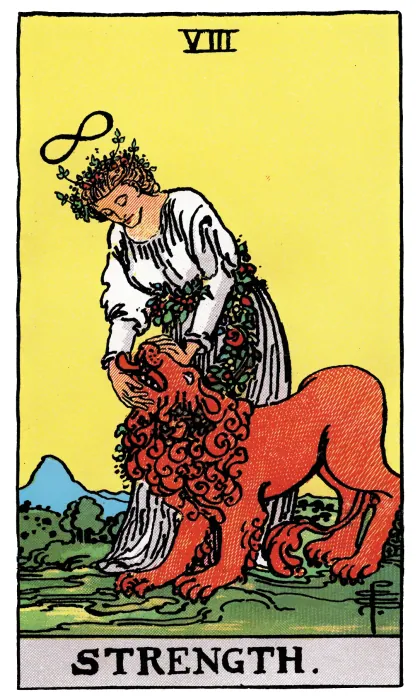
Strength tarot card from a Rider-Waite-Smith-style deck
Strength · Major Arcana 8 Artwork by Pamela Colman Smith (1910) · Public Domain Mark 1.0 · Image usage
Ask your own question: free AI reading
Arcana Major
Number8
Upright tendencyLeans yes
Reversed tendencyMaybe

Strength upright and reversed meaning

Strength tarot card upright

Strength upright meaning

Drawn upright, Strength means having the courage to stay calm and kind in a difficult situation. It points to patience, self-control, and the quiet confidence that comes from handling strong feelings well.

Strength concerns the moment when you could react sharply and choose how to respond. Fear, anger, or desire can be acknowledged without being allowed to make the decision. That might mean keeping your voice level in an argument, sticking with a new habit on the days it feels hard, or staying with a friend through their anger without matching it.

The card also describes how you approach tension with someone else. A colleague who becomes defensive about a missed deadline may be easier to speak with once you separate the practical problem from the accusation. Calm gives the conversation room, though it cannot make another person cooperate.

It also involves standards. Gentle does not mean giving in. The woman in the card is still in charge of the lion. If keeping the peace means never saying what you need, the restraint may be costing too much.

A practical question is what a calm and firm response would look like here. Picture what you would say and what you would not do, then try it once in a low-stakes moment.

Strength tarot card reversed

Strength reversed meaning

When reversed, Strength can suggest self-doubt, depleted patience, or feelings held so tightly that they influence choices without being acknowledged.

Self-doubt can make an ordinary challenge feel like a test of your whole character. Someone who has prepared for a presentation may still want to withdraw because one difficult question would feel unbearable. What is missing may not be skill. It may be room to make a mistake without treating it as a verdict.

After a long stretch of absorbing other people's frustration, patience wears thin. Snapping over a small request can point to that accumulated strain. Look at what has been asked of you and whether you have been able to refuse.

A calm manner can also conceal resentment. Agreeing to host every family gathering while repeatedly finding ways to cancel is different from saying you no longer want the role. The feeling has been left out of the conversation.

Pressure shows which one this is. Avoidance points to self-doubt. Snapping points to depleted patience. Calm words followed by contradictory actions point to hidden feelings. Encouragement will not fix an unfair workload, and a break will not replace an honest refusal, so identify the pressure before asking yourself for more endurance.
Strength in love, career, and money

Strength in love & relationships

Strength love meaning

Upright

For relationships, Strength supports patience, tenderness, and honest handling of fear or anger. It can describe a bond strong enough to hold a difficult conversation without either person using vulnerability as leverage. A couple facing a hard season, such as a job loss, can draw on this card's steadiness. Attraction and confidence belong here too. If you are single, it supports showing up as yourself, with nerves included, and letting connection build at a natural pace. Patience with others does not extend to repeated harm, and the card does not ask you to tolerate that.

Reversed

The reversal may show insecurity turning into jealousy, testing the other person, or long silences that eventually erupt. One partner may be carrying all the emotional steadiness for both. Name the fear directly, without making the other person responsible for curing it. If you are the jealous one, notice the moment it starts and say what you fear. Jealousy is a feeling to discuss, not evidence that a partner has done something wrong.

Strength as feelings

Upright

As feelings, Strength usually points to warmth combined with self-control. Someone may care about you deeply and express it gently, perhaps more patiently than you expect. After a disagreement, they may want to stay close while taking care over what they say.

Reversed

Strength reversed points to feelings that are strong and poorly managed. Someone may feel insecure, jealous, or frustrated, and may not know how to say it. They may also be holding back feelings because they doubt they will be welcome. The tension may be about themselves as much as about you.

Strength: how someone sees you

Upright

The impression Strength suggests is of someone calm, kind, and resilient. People may see you as the person who stays steady when others panic, or who can handle a difficult personality without drama. Some may admire your patience, and may trust you with something hard.

Reversed

They may see you as unsure of yourself, or as someone who seems calm while something else is going on underneath. A single outburst after a long period of holding back can shape that impression.

A card can suggest how someone might see you. Only that person can tell you what they actually think.

Strength in career & money

Strength career meaning

Upright

Professionally, Strength favors patience, persistence, and handling people well. It suits roles that involve care, teaching, negotiation, or working with difficult clients, and long projects that need steady effort. It also supports standing your ground calmly in a disagreement with a manager or colleague. Prepare your points, keep your tone even, and repeat your position as often as needed without raising your voice. In a job interview, it favors a calm, honest account of a difficult situation you handled well.

Reversed

When Strength is reversed, it can describe burnout from absorbing other people's stress, self-doubt about a role you are qualified for, or frustration that is about to come out badly. It can also point to avoiding a confrontation that needs to happen. Write down what you would say if you were calm, and use that as your script. Where demands conflict, ask the person setting them which should take priority.

Strength money meaning

Upright

In a money reading, Strength points to discipline that comes from patience. It favors steady saving, resisting impulse purchases, and sticking with a sensible plan through boring months. Automating savings removes the daily test of willpower. Small, consistent choices count for more here than dramatic changes.

Reversed

Financially, it can point to emotional spending, such as buying to calm anxiety or to prove something. It can also describe giving up on a plan after one setback. Notice which moods lead to spending, and wait a day before any purchase made while upset.

For investment or debt decisions, talk to a qualified financial professional.

Strength as advice and as a person

Strength as advice

Upright

As guidance, Strength suggests lowering the volume without lowering the standard. Choose one difficult situation and try a calm, clear response. Watch what it changes. If nothing shifts, adjust the boundary, or step away.

Reversed

Strength reversed advises you to acknowledge the fear or anger directly, then choose a contained action that does not let it run the situation. Rest first if you have been holding everything together for too long.

Strength as a person

Upright

In a person position, Strength may describe someone gentle, patient, and quietly brave, who handles difficult people and situations without force. They may let someone finish a difficult sentence, disagree without humiliating them, or remain firm when challenged. Others tend to calm down around them.

Reversed

The reversed card may describe someone who doubts their own abilities, or someone who keeps a calm face while struggling with anger or fear. It can also describe a person whose patience has run out after carrying too much. They may need rest more than advice.

Is Strength a yes or no card?

Upright: Leans yes

Upright, Strength leans yes. The case for yes is stronger when the plan leaves room for patient effort and a calm response to setbacks. If the plan relies on force or pressure, the yes weakens. You appear to have the patience the situation needs.

Reversed: Maybe

This is a maybe. Moving forward may still be possible, but self-doubt, exhaustion, or a strong feeling you have not addressed is shaping the decision. If you can name that feeling and rest or get support first, the answer may move toward yes. Pushing ahead while drained tends to make things harder.

These tendencies use the reference question “Do current conditions support moving forward?” Your question and circumstances can change the interpretation; this is not a guaranteed outcome.

Strength and spirituality

For spiritual questions, Strength connects practice with patience and self-compassion. Practices that help you stay with strong feeling, such as noticing anger or fear without acting on it straight away, fit the card. It also encourages a kind relationship with the parts of yourself you find hard to accept, so they can be understood instead of fought. Waite gives contemplation a place in this card, alongside the more familiar image of courage.

Symbols in Strength

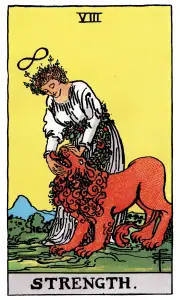
Strength shows a woman in a white dress, crowned and belted with flowers, with one hand above and one below a red lion's jaws. A horizontal figure eight floats above her head. The lion leans toward her, and a garland of flowers runs between them. Behind them is a yellow sky, green ground, and a blue mountain in the distance.

The lion can stand for instinct, and the woman for a person learning to work with it. She is close to the animal, not fighting it.

The figure eight is the same sign that appears above The Magician. Here it suggests strength that lasts, built through continued practice, not one brave moment.

The flowers show influence through care. Waite notes that the lion is already tamed and is being led by a chain of flowers, so the scene is about calm control that has already been won.

The distant mountain keeps a real challenge in view.

Traditional associations: Major Arcana VIII in the Rider-Waite-Smith sequence · Courage, patience, and self-command · Traditionally associated with Leo. Association systems differ between traditions.

Reading notes for Strength

Example reading. A parent's teenage child has been angry and withdrawn since changing schools three months ago. Their last two conversations ended in shouting. The parent asks, "How should I handle this?" and draws Strength upright.

The card supports a calm, patient approach: one regular, low-pressure time together each week, without pushing for answers. It suggests that steady presence may help more than another serious talk. The card does not promise the child will open up soon. If there are signs of risk, outside support matters more than any card.

Strength FAQ

What zodiac sign is Strength associated with?

The Golden Dawn assigns Strength to Leo, the sign of the lion. Leo is a fire sign ruled by the Sun, and the pairing fits the image closely. It is a symbolic correspondence within that system and does not identify a Leo person in your reading.

Why is Strength number 8 and not 11?

In older decks, Strength was usually 11 and Justice was 8. Waite swapped them for the Rider-Waite-Smith deck, saying only that his reasons satisfied him. Some decks still use the older order, so the number depends on which deck you use.

Why does Waite distinguish Strength from ordinary self-confidence?

He treats the card as spiritual fortitude, not simply confidence in one's abilities. In his account, the lion can represent the passions and the woman a higher nature able to meet them. The everyday reading used here draws on that distinction: confidence may help, but handling a strong feeling matters more than appearing fearless.

How is Strength different from The Chariot?

Strength is about inner control, gained through patience, while The Chariot is about outer direction, gained through willpower. Waite notes that the charioteer's victories are external and not within himself. Strength describes the inner work the Chariot can leave undone, such as facing the fear behind ambition.

Sources: A. E. Waite, The Pictorial Key to the Tarot (1910), Part II: VIII — Strength; Israel Regardie, The Complete Golden Dawn System of Magic, The Tarot: names and attributions of the Tarot trumps (Book T)