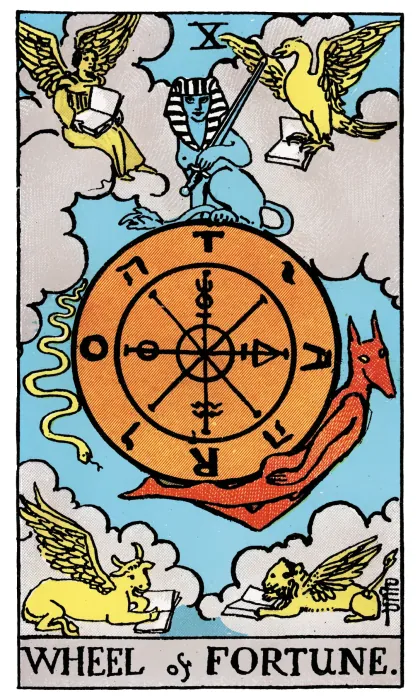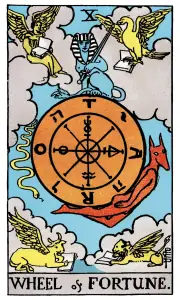
Wheel of Fortune upright meaning
Drawn upright, the Wheel of Fortune means a change in conditions that opens a new opportunity. Something has turned: a market shifts, a person enters or leaves your life, a door opens that was closed last year, or a rule changes.
The Wheel draws attention to circumstances you may not control. A new rule, a move, or someone else's decision can alter your options without saying anything about your effort or merit. What you can control is your response, and the useful question is what the changed conditions now allow.
That might mean applying for a role that suddenly became available, saying yes to an introduction, or adjusting a plan because circumstances have improved. It can also mean recognizing that an advantage you relied on has gone, and acting on that early.
The upright card usually reads as a favorable turn, though an opening can still prove unsuitable or smaller than it first appears. A turning point can also be small enough to miss: a class changes its timetable and becomes possible to attend, or a friend moves nearby.
A practical exercise is to list what has changed in the last month, then mark which changes create an opening for you. Pick one and act on it this week.
Wheel of Fortune reversed meaning
Reversed, the Wheel of Fortune can suggest resistance to change, a repeating setback, misplaced blame on luck, or a difficult turn that is outside anyone's control.
When circumstances have changed, an old plan may keep organizing your decisions long after it stopped fitting. A club has fewer members, for example, but its events still assume the attendance it had years ago.
Repeated setbacks deserve a closer look. The same money shortfall each winter could involve seasonal work, recurring costs, a habit, or several things together. Look for what recurs in the circumstances as well as in your response. The wheel keeps landing in a familiar place.
Sometimes "bad timing" avoids a specific explanation. Missing a submission date because nobody knew who was responsible is different from an event being cancelled by its organizer. The first offers a process to change. The second may offer no comparable remedy.
Look for the repeatable part. The same thing happening several times is a pattern worth studying. Constant comparison of the present with the past suggests resistance. A setback that really came from nowhere leaves one question, what you can still influence, without treating every setback as proof that you should have acted differently.