Knight of Swords Tarot Card Meaning

Quick Meaning

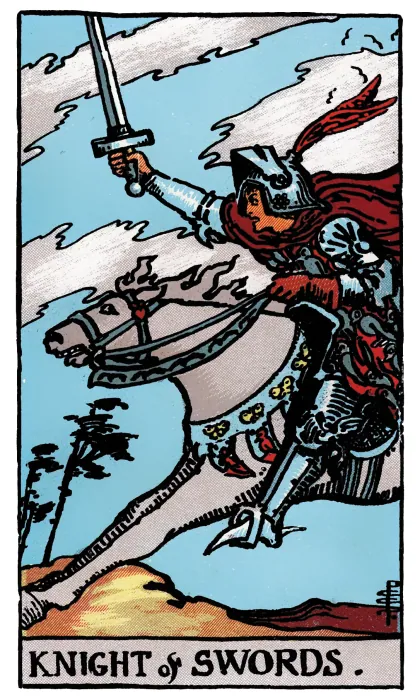
The Knight of Swords leans into a full charge while wind bends the landscape around his raised blade. Conviction has become immediate pursuit, useful when a real conflict requires a fast response. If opposition itself supplies all the momentum, the first visible target may be attacked before the wider context or human cost is understood.

  • decisive action
  • argument
  • speed
  • conviction
  • ambition
  • direct communication
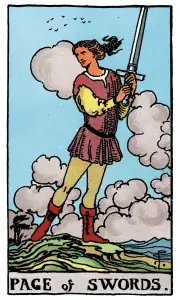
Knight of Swords tarot card from a Rider-Waite-Smith-style deck
Knight of Swords · Swords suit Artwork by Pamela Colman Smith (1909) · Public Domain Mark 1.0
Number
12
Upright tendency
Maybe
Reversed tendency
Leans no

Knight of Swords upright and reversed meaning

Upright

The Knight of Swords turns a conviction into immediate pursuit. Courage and speed can help when a real question demands a prompt response, provided the central claim has already been tested. The challenge is to keep the charge proportionate. An objection may improve the action rather than obstruct it, and the ability to slow or narrow the pursuit shows more command than treating every pause as defeat.

Reversed

Reversed, momentum can outlive the purpose that created it. Winning the exchange or forcing an answer becomes more urgent than resolving the original issue. Each objection expands the target, so a disagreement becomes a campaign and a pause feels like disloyalty. The card describes speed protecting itself from reconsideration. Greater force supplies neither new information nor reliable follow-through; the wider context remains necessary even when urgency feels completely convincing.

A common misreading: Fast, forceful language is not evidence that the underlying claim is true.

Love, work, and practical questions

Love & relationships

Love

Upright. An approach may be fast, direct, and intense. The Knight describes its momentum, while patience, consent, and follow-through determine whether that urgency can become a dependable connection.

Reversed. Communication may feel cutting, relentless, or organized around forcing an answer, with abrupt withdrawal after an impulsive declaration. The reversal describes pressure overtaking curiosity without deciding the terms or timing of real contact.

Feelings

Upright. A strong urge to speak can resemble certainty or commitment. Whether the person can hear a request to slow down and remain consistent afterward matters more than the force of the initial pursuit.

Reversed. Feelings may be reactive, defensive, or expressed as argument, abrupt declaration, and withdrawal. Emotional arousal can feel like certainty, yet the card does not reveal whether intensity will become reflection, repair, or reliable follow-through.
Work & money

Career

Upright. At work, a deadline, crisis, campaign, or difficult claim may create an atmosphere of fast analysis. The Knight's specific risk is treating every objection as delay, allowing momentum to narrow the question until winning the exchange replaces solving the original problem.

Reversed. A rushed rollout, hostile message, or unstable priority may symbolize urgency that has lost its aim. The work becomes harder to stop because speed itself is now being treated as evidence that the campaign must continue.

Money

Upright. A deadline or fast-moving negotiation may create real urgency. The distinction is whether speed addresses the material issue or crowds out understanding of the terms, context, and consequences involved.

Reversed. Pressure can make a financial choice feel like an immediate contest with no alternatives. Aggressive claims and scattered urgency may obscure the wider costs; speed itself does not verify the argument.

Yes or No Tendency

Upright: Maybe

Maybe: a prompt response can help only if urgency still leaves room to understand a relevant objection.

Reversed: Leans no

No when scattered force and aggression replace a proportionate response to the actual question.

These tendencies use the reference question “Do current conditions support moving forward?” Your question and circumstances can change the interpretation; this is not a guaranteed outcome.

Knight of Swords as a person

Upright

A direct, fast-moving pursuer of an argument or objective, most effective when conviction leaves room for listening.

Reversed

Someone who treats every pause as defeat and expands the conflict rather than reconsidering its original purpose.

Symbols in Knight of Swords

The charge draws the whole landscape into the force of an immediately pursued idea.

The charging white horse
Full extension and forward force make rapid execution impossible to separate from the reading.
The raised sword
The Knight carries an idea or argument as an active weapon aimed toward immediate consequence.
Streaming red cape and plumes
Strong red movement intensifies urgency, ambition, and emotional heat inside an air suit.
Bent trees and racing clouds
The wider environment appears swept by the same force, showing how momentum affects more than the rider.

Traditional associations: Swords · air · thought, communication, and conflict · Knight · pursuit, movement, and testing an ideal. Association systems differ between traditions.

Questions about Knight of Swords

What does the Knight of Swords mean in a love reading?

A person may pursue clarity, confrontation, or commitment with striking speed. Directness can feel refreshing, yet intensity is not proof of consent, readiness, or reliable follow-through; the Knight describes the force and tempo of the approach, not its outcome.

What does the Knight of Swords reversed mean?

Reversed, speed becomes aggression, reckless argument, or scattered urgency. The person may attack the first visible problem without understanding the system around it.

Is the Knight of Swords a yes or no?

Upright: Maybe. Urgency can sharpen the claim, but it may leave too little room for an objection to be understood before the reply arrives. Reversed: No. Aggression and scattered speed are turning disagreement into a demand for immediate surrender.

Elena is ArcaSeer’s named editorial voice. How Elena’s notes are created