Five of Swords Tarot Card Meaning

Quick Meaning

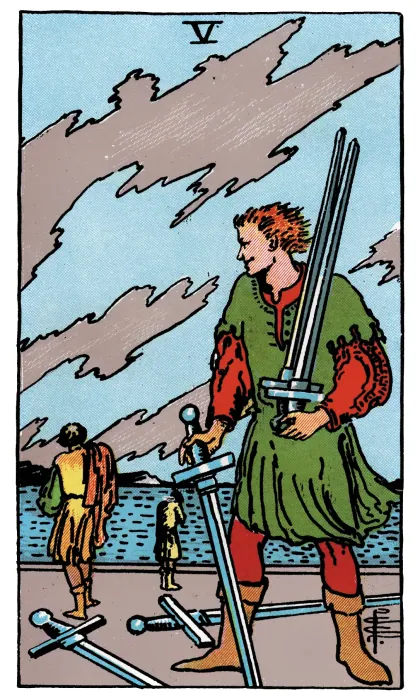
One figure gathers most of the swords while two others leave the shore in visible distress. The apparent victory may have damaged trust, dignity, or cooperation still needed afterward. Turning the card over does not erase the loss. It can show lingering defeat, exposed tactics, regret, or an attempt at repair whose credibility depends on changed behavior.

  • conflict
  • hollow victory
  • self-interest
  • aftermath
  • humiliation
  • cost of winning
Five of Swords tarot card from a Rider-Waite-Smith-style deck
Five of Swords · Swords suit Artwork by Pamela Colman Smith (1909) · Public Domain Mark 1.0
Number
5
Upright tendency
Leans no
Reversed tendency
Maybe

Five of Swords upright and reversed meaning

Upright

The Five of Swords examines what remains after someone wins. A correct argument or successful tactic can still damage the trust and cooperation needed for the original purpose. Defending a position is not itself the problem; the issue is how far advantage is pressed and who carries its aftermath. The departing figures make dignity and future participation part of the result, even when the winner controls the foreground.
Reversed

Reversed, the weapons may be lowered while their consequences remain. Humiliation, regret, concealed tactics, or exhaustion can outlast the active disagreement. A wish to make peace is meaningful only alongside changes in how people are treated. Silence may reflect withdrawal by someone with less power, rather than agreement. The reversal therefore opens a question about accountability and repair without promising that the contested relationship has been restored.

Love, work, and practical questions

Love & relationships

Love

Upright. Conflict can become an attempt to punish or force surrender. Being correct does not make a humiliating tactic constructive; the card highlights its relational cost without deciding contact or separation.

Reversed. Someone may want to end a harmful argument pattern, admit wrongdoing, or recover after separation. Reconciliation is not owed because the aggressor feels regret. Look for accountability, respect for boundaries, and a specific plan for handling the next disagreement.

Feelings

Upright. The Five of Swords can show resentment, defensiveness, shame, or a desire to regain power after feeling exposed. Someone may care and still choose a harmful tactic. Emotion explains behavior but does not excuse humiliation or coercion.

Reversed. They may include regret, exhaustion with conflict, or a cautious wish to make amends. A person can feel sorry primarily because they dislike the consequence. Changed conduct over time distinguishes accountability from discomfort.

Work & money

Career

Upright. A dispute over credit or a mistake may turn into public blame. The Five examines the damage left by the method of correction, including cooperation still needed after the record is settled.

Reversed. An exhausted team may stop arguing before an unfair outcome is repaired. The reversal concerns what remains unresolved beneath a quieter workplace, particularly for those with less influence over the original dispute.

Money

Upright. An adversarial deal can secure money or advantage while damaging future cooperation. The material question includes the trust, access, and shared ground lost alongside the visible gain.

Reversed. Settlement or repayment may become imaginable as the contest loses momentum. A quieter dispute is not necessarily fair: the effects of pressure and the distribution of loss still matter.

Yes or No Tendency

Upright: Leans no

Usually no if the means of winning would damage the trust or dignity the result still needs.

Reversed: Maybe

Maybe when changed conduct addresses the harm; a ceasefire or expression of regret is insufficient on its own.

These tendencies use the reference question “Do current conditions support moving forward?” Your question and circumstances can change the interpretation; this is not a guaranteed outcome.

Symbols in Five of Swords

The distribution of weapons and the departing figures place the cost of winning inside the image.

The figure holding three swords
The apparent winner controls most of the weapons and the foreground after the contest.
Two abandoned swords
Weapons left on the ground show surrender, withdrawal, and the cost of continuing.
The departing figures
Distance and visible distress shift attention from victory to relational aftermath.
Jagged clouds over water
The unsettled sky and shoreline sustain tension after the active clash has ended.

Traditional associations: Swords · air · thought, communication, and conflict · Five · disruption, shortage, or adjustment. Association systems differ between traditions.

Questions about Five of Swords

Is the Five of Swords always bad?

Surrender is not the lesson; proportion is. A necessary correction can protect the larger objective, while public humiliation or one final advantage may leave the winner with nothing useful to lead, repair, or share.

What does the Five of Swords mean in a love reading?

An argument can become a campaign to punish, expose, or force surrender, and even a factually correct person can handle conflict destructively. The card can symbolize contempt or intimidation without choosing contact, separation, or safety action. Any present danger belongs to real-world emergency or qualified support; other relationship choices depend on current facts and the people involved.

What does the Five of Swords reversed mean?

Reversed, defeat or grief may linger after the contest, concealed tactics may surface, or regret may open a path toward de-escalation. Repair is one possibility, not a guaranteed result of turning the card over.

Elena is ArcaSeer’s named editorial voice. How Elena’s notes are created