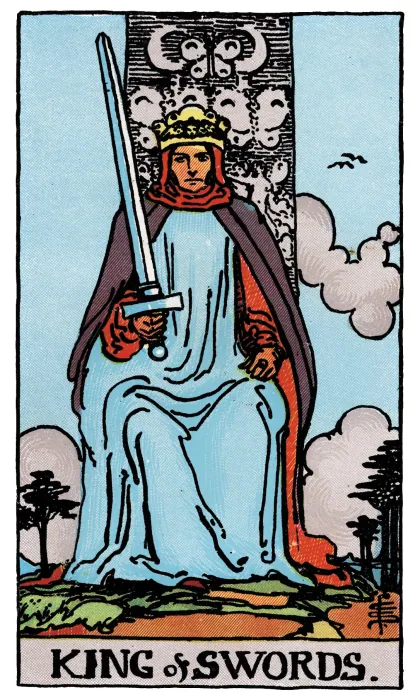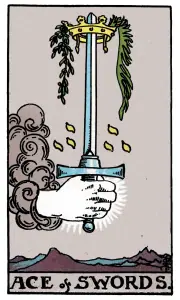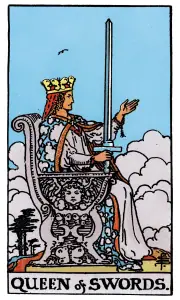
King of Swords upright meaning
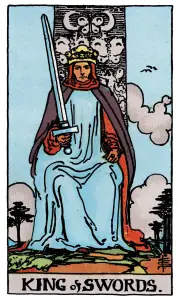
Upright, the King of Swords means expertise turned into a decision that affects other people. He weighs the facts, applies a standard, and makes a call he can explain.
This King's authority is measured by what his decision enables, restricts, and assigns, not by how polished the reasoning sounds. A good doctor explaining a treatment plan in plain language, a manager setting a clear policy and applying it fairly, or a teacher grading consistently all fit the card.
The card favors clear thinking under pressure. It asks you to separate feelings from facts, consider long-term consequences, and choose the option you could defend in front of the people it affects.
It also favors transparency and consistency. Explaining your reasons, and what evidence would change your mind, is part of using authority well.
Waite's meanings include whatever arises out of the idea of judgment: power, command, authority, and militant intelligence.
A practical step is to write down the standard you are using for a decision, in one sentence. Then ask what evidence would change your mind. If you cannot name any, your position may have hardened into rank. Share your reasoning with the people affected, and invite one question before you finalize.
King of Swords reversed meaning
The reversed King of Swords can suggest intelligence used as a weapon: to dominate, to rationalize, or to keep a distance from the consequences.
Domination looks like using expertise to close down debate. "I know best" replaces an explanation. Questions are treated as challenges to authority.
Rationalization looks like a polished argument that hides whose needs were dismissed. The logic sounds airtight, and the outcome happens to favor the person making it.
Distance shows up as cold logic that ignores human impact. A decision may be technically correct and still be harmful because no one asked how it would land.
Selective evidence and uneven enforcement are signs of this card. Rules apply to some people and not others, and facts that do not fit are left out.
Waite's reversed meanings include cruelty, perversity, perfidy, and evil intention, which point to authority used without conscience.
The way disagreement is handled tells you most. Welcoming questions is a good sign about attitude, though the reasoning still has to stand on its evidence. If questions are punished or dismissed, power may be doing the work. If you hold authority, ask one person affected by your decision how it lands for them. If someone else does, ask them what evidence would change their mind, and listen carefully to the answer.