Six of Wands Tarot Card Meaning

Quick Meaning

The Six of Wands tarot card means recognition after a success: a result that other people can see, and the confidence that comes with it. Upright, it favors accepting credit, sharing it with those who helped, and stepping into a more visible role. Reversed, it can point to recognition that is delayed, doubted, inflated, or given to the wrong people. For yes-or-no questions, the Six of Wands leans yes upright and is a maybe reversed.

Upright
  • victory
  • recognition
  • success
  • confidence
Reversed
  • lack of recognition
  • self-doubt
  • fall from grace

Updated

Six of Wands tarot card from a Rider-Waite-Smith-style deck
Six of Wands · Wands suit Artwork by Pamela Colman Smith (1910) · Public Domain Mark 1.0 · Image usage
Ask your own question: free AI reading
Arcana Minor · Wands
Number6
Upright tendencyLeans yes
Reversed tendencyMaybe

Six of Wands upright and reversed meaning

Six of Wands tarot card upright

Six of Wands upright meaning

When upright, the Six of Wands means a success that others can see. A project is praised, an application is accepted, a team wins, or your work finally gets the attention it deserves.

What sets the card apart is the public element. The success is not private satisfaction. It has entered other people's view, and that changes things. Praise, trust, and new opportunities often follow. So does greater scrutiny, since people now watch what you do next.

The card favors receiving recognition gracefully. Many people deflect praise or rush past it. The rider in the image is surrounded by others carrying wands. Few victories are achieved alone.

It also asks what comes next. Recognition brings obligations: a bigger role, higher expectations, or a responsibility to the people who supported you. Let the next real task set your direction, not the applause.

A practical way to use the card is to write down what actually earned the result, such as a skill, a decision, or someone's help. That list tells you what to keep doing. It also tells you who to thank. Keep the list somewhere you will see it before the next project.

Six of Wands tarot card reversed

Six of Wands reversed meaning

Drawn reversed, the Six of Wands can suggest recognition that is delayed, recognition that is inflated, private doubt about a real success, or credit that leaves out important contributors.

Delayed recognition looks like good work that nobody has noticed yet. The result is real, and the acknowledgment has not arrived. Waite's additional meanings call the reversal the fulfillment of deferred hope, so the delay may end well.

Inflated recognition looks like praise that runs ahead of the result. A launch is celebrated before the numbers are known, or a person is promoted on reputation more than evidence.

Private doubt shows up as being praised and not believing it. You may feel like a fraud, or worry that people will soon discover the success was luck.

Missing credit often means one person collecting praise for a group effort. Quiet contributors drop out of the story.

Waite's own reversed meanings include darker ones: fear, as of an enemy at the gate, and disloyalty. These fit situations where success creates rivals or jealousy.

Check the evidence and the credit trail. What was actually achieved, and who did the work? The answer shows whether the issue is performance, visibility, or an unfair process.
Six of Wands in love, career, and money

Six of Wands in love & relationships

Six of Wands love meaning

Upright

Romantically, the Six of Wands can describe a relationship that feels openly chosen, supported by friends and family, or proud of progress made together. A couple might announce an engagement, move in together, or simply feel admired as a pair. It can also describe one partner receiving more public attention than the other. Enjoy the validation without letting outside approval define the bond. People who are single may feel confident and noticed, and that confidence can make it easier to meet someone. A friend's praise of you to someone else can be part of how connection starts.

Reversed

The relationship may be competing with status, attention, or the need to appear successful. One person can feel unseen while the other seeks approval from an audience, such as social media. Bring the measure of success back to how the connection works when nobody is watching. A quiet evening that both of you enjoy says more than public praise.

Six of Wands as feelings

Upright

As feelings, the Six of Wands can suggest pride, admiration, and happiness. Someone may feel proud to be with you, or proud of what the two of you have achieved. Where interest has already been shown, they may want others to know about the relationship, and enjoy introducing you.

Reversed

When the Six of Wands is reversed here, the feelings may involve insecurity or competition. Someone may feel overshadowed by you, or may want more recognition from you than they are getting. They may also doubt whether they deserve the attention they receive. Simple, specific appreciation from you may matter to them.

Six of Wands: how someone sees you

Upright

Someone may see you as successful, confident, and admired, a person who has earned their place. They may look up to you, or see you as a leader in your group. Some may want to be associated with your success.

Reversed

You may come across as someone who has not yet received the credit they deserve, or as a person whose confidence has slipped. Some may see you as more focused on image than substance, especially after one very public moment.

A card can suggest how someone might see you. Only that person can tell you what they actually think.

Six of Wands in career & money

Six of Wands career meaning

Upright

At work, the Six of Wands points to recognition and visible success: a promotion, an award, a successful pitch, strong reviews, or being chosen to lead. It favors presenting completed work and accepting earned credit. Use the moment to ask for the next opportunity you want, since recognition opens doors that are hard to open otherwise. Name the colleagues who helped, publicly. If you are job hunting, put concrete results at the top of your applications.

Reversed

Reversed, the Six of Wands can describe work that goes unrecognized, credit taken by someone else, or a public success that hides problems. It can also describe self-doubt after a promotion. Keep a dated record of your contributions and results, and bring it to your next review. If credit was misassigned, raise it calmly and with evidence, ideally in writing.

Six of Wands money meaning

Upright

In a money reading, the Six of Wands points to a reward for effort: a raise, a bonus, a prize, or a successful sale. It supports celebrating, within reason, and putting part of the gain toward your next goal. Recognition can be a good moment to negotiate pay. Keep a note of what led to the raise, for next time.

Reversed

When the Six of Wands is reversed, it may point to a reward that is delayed, smaller than expected, or spent to keep up appearances. Avoid spending money you have been promised but not received. If a promised payment is late, follow up in writing. Base your budget on what has actually arrived.

For investment or debt decisions, talk to a qualified financial professional.

Six of Wands as advice and as a person

Six of Wands as advice

Upright

Taken as advice, the Six of Wands suggests accepting the recognition, naming the shared work behind it, and deciding what responsibility now follows from being visible. Say thank you once, clearly, without brushing the praise aside.

Reversed

When the Six of Wands comes up reversed, check the evidence and the credit trail before deciding whether the problem is performance, visibility, or an unfair process. Then address that one problem directly and calmly.
Six of Wands as a person

Upright

In a person position, the Six of Wands can describe someone confident, successful, and admired, who leads from the front and enjoys public recognition. They often have a following, at work or among friends. At their best, they handle attention comfortably and use it to lift others.

Reversed

It may describe someone who craves recognition, or someone who has achieved a great deal but cannot believe it. They may also be someone whose public success hides private strain.

Is Six of Wands a yes or no card?

Upright: Leans yes

Upright, the Six of Wands leans yes. The card favors moving forward with demonstrated support, especially when presenting finished work or accepting an earned opportunity. The yes is strongest when the success rests on real results that others can see. If the praise outruns the results, slow down until the results catch up.

Reversed: Maybe

Drawn reversed, the Six of Wands gives a maybe. Before moving on, find out what was actually achieved, who did the work, and whether the result can hold after public attention moves on. If those answers are solid, the answer can move toward yes.

These tendencies use the reference question “Do current conditions support moving forward?” Your question and circumstances can change the interpretation; this is not a guaranteed outcome.

Six of Wands and spirituality

In spiritual practice, the Six of Wands can describe confidence in a path that is bearing fruit, or recognition within a community. It also asks for humility. Success in practice is real, and so is the risk of pride. Sharing what helped you, so that others can use it too, keeps that success connected to the people around you. Gratitude helps here.

Symbols in Six of Wands

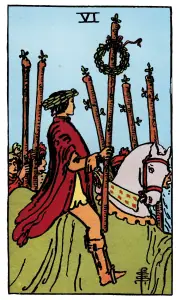
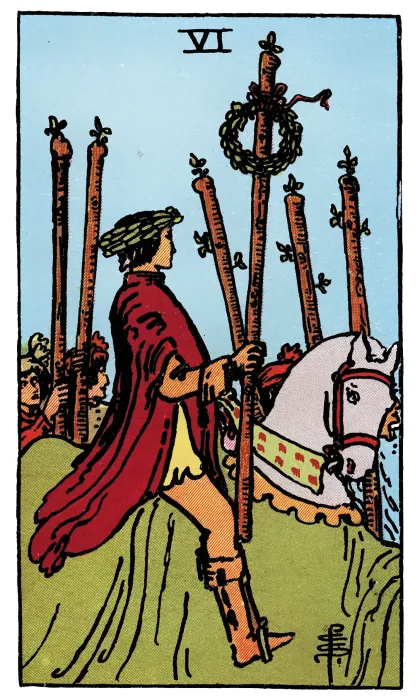
The Six of Wands depicts a rider on a white horse, wearing a laurel wreath and a red cloak. The rider holds a tall wand topped with a second laurel wreath tied with ribbon. Around the horse, other people walk carrying wands of their own. The horse is covered in a green cloth that reaches nearly to its hooves.

The laurel wreaths mark victory and recognition. Others can see what has been achieved.

The white horse raises the rider above the crowd. The covered body of the horse hints at the support carrying the procession, much of it out of sight.

The people walking alongside provide acknowledgment, and they are also the group against which status is measured.

The rider's height makes leadership visible. It also brings the risk of being set apart from peers.

Waite says the card is designed to cover several meanings: a victor triumphing, great news carried by a royal messenger, and "expectation crowned with its own desire." That last phrase captures the card well.

Traditional associations: Wands · fire · action, desire, and creative will · Six · exchange, recovery, or movement toward harmony. Association systems differ between traditions.

Reading notes for Six of Wands

Example reading. A retired teacher led a volunteer project that raised money for a local library. The local newspaper interviewed them, and they have been asked to lead a bigger project next year. They ask, "How should I handle this attention?" and draw the Six of Wands upright.

The card supports accepting the recognition openly and naming the volunteers who did much of the work, perhaps in a public thank-you. It also points to the next responsibility: deciding whether they want the larger role. Answering the invitation a week or two after the thank-you is published gives them time to decide whether they want the bigger role or simply enjoyed this one.

Six of Wands FAQ

What is the Six of Wands in the Golden Dawn system?

Book T calls the Six of Wands the Lord of Victory and assigns it to Jupiter in Leo, the second decan of Leo. Jupiter's expansion and Leo's pride and visibility suit a card about public success and the visible reward of effort.

What does Waite mean by "expectation crowned with its own desire"?

Waite says the card can cover several meanings, including great news carried in state and the "crown of hope." The phrase describes a hope that has been fulfilled exactly as wished. In a reading, it supports the sense that effort and expectation have finally met.

Why does Waite connect the Six of Wands reversed with fear and disloyalty?

His reversed meanings include fear, as of an enemy at the gate, treachery, and indefinite delay. They describe the risks that can follow visible success, such as rivals or betrayal. His additional meanings soften this, listing the fulfillment of deferred hope when reversed.

How is the Six of Wands different from the Chariot?

The Six of Wands is about recognition after a win, while the Chariot is about the drive and discipline to reach a goal. The Six rides among supporters, already crowned. The Chariot is still moving, holding opposing forces in line.

Sources: A. E. Waite, The Pictorial Key to the Tarot (1910), Part III: Six of Wands; Israel Regardie, The Complete Golden Dawn System of Magic, The Tarot: names and attributions of the Tarot trumps (Book T)