Eight of Pentacles upright meaning
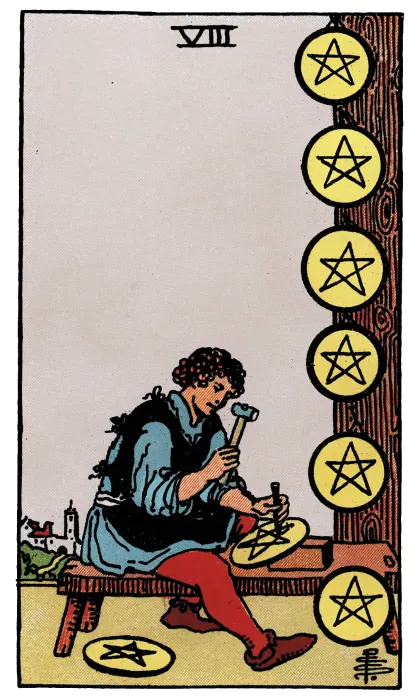
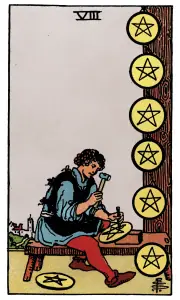
Upright, the Eight of Pentacles means you are putting in focused, repeated effort to build a skill or finish a piece of work well. A student practicing an instrument every day, an apprentice learning a trade, or a programmer improving their code line by line fits this card.
What sets it apart is the value of repetition. Skill grows through doing the same thing many times, each time a little better. The card favors patience with the process and pride in quality, even when no one is watching.
It also describes the preparatory stage. Waite's meanings include work, employment, commission, and craftsmanship, and he adds perhaps in the preparatory stage. This is the time of learning and building, before mastery and recognition.
Book T calls the card the Lord of Prudence, and its description is a warning as much as praise: over-careful in small things at the expense of great. Careful work helps most when it keeps the larger goal in view.
A practical step is to choose one skill that matters to your goals and set a regular time to practice it. Keep a simple record of what you worked on each session. Ask someone more experienced to review your work once a month. Notice small improvements, and let them build.
Eight of Pentacles reversed meaning
Drawn reversed, the Eight of Pentacles can suggest perfectionism, boredom with repetition, cutting corners, or skill used for cunning ends.
Perfectionism looks like reworking the same piece endlessly, never finishing because it is never good enough. The work stops improving and starts stalling.
Boredom with repetition looks like losing interest in practice. The routine feels pointless, and attention drifts.
Cutting corners shows up as rushing through work, skipping steps, or delivering something that looks finished but is not.
Skill used for cunning ends often means talent turned toward manipulation. Waite's reversed meanings include voided ambition and vanity, and he notes that the card may mean skill in the sense of an ingenious mind turned to cunning and intrigue.
The reversal can also describe work without growth: doing the same thing for years without learning anything new.
The quality and direction of the work tell you which reading fits, and each has a small fix. Endless polishing needs a finish date that you keep. Boredom wants a new routine or a fresh challenge. Cut corners call for slowing down on one important task, and stalled growth for feedback or a course. Skill used to mislead should be named plainly.