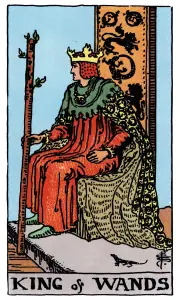
King of Wands upright meaning
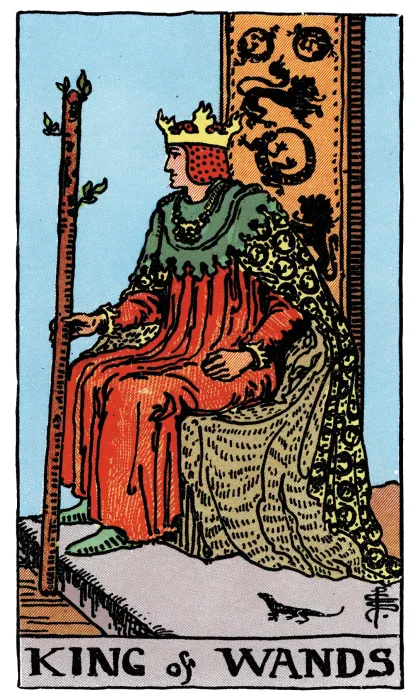
When upright, the King of Wands means a large vision turning into direction that others can recognize and act on. It points to leadership, entrepreneurship, and the confidence to make decisions and stand behind them.
What sets this King apart is the pairing of creative authority with responsibility. He sets people in motion, and he answers for where that motion leads. A founder who explains why the company exists, a team leader who sets an ambitious goal and then removes obstacles for the team, or a parent who models courage can all fit.
The card favors big-picture thinking that can be carried out. A vision becomes credible when others can act on it clearly, with room to contribute. It is less about controlling every detail than about holding the direction steady while others do their part.
Waite says the card always signifies honesty. That is a useful quality to bring to leadership: saying plainly where things stand, including setbacks.
A practical test for this card is whether the people around you could describe your direction in one sentence. If they can, and they know what part they play, the King's energy is working. If they cannot, simplify the message before adding more ambition.
King of Wands reversed meaning
The reversed King of Wands can suggest leadership that has become domineering, decisions made impulsively, a vision protected from correction, or a forceful person made more careful by setbacks.
Domineering leadership looks like centralizing every decision. Disagreement is treated as disloyalty, and other people's ideas are ignored or taken over. Meetings become announcements.
Impulsive leadership looks like changing direction suddenly, then blaming others for the slow progress that follows. The team spends more time adjusting than building.
Protected vision shows up as refusing feedback. The leader believes in the plan so strongly that evidence against it is dismissed. Advisers stop speaking up.
Tempered confidence is the gentler reading. Waite's reversed meaning is "good, but severe; austere, yet tolerant." A setback can make a forceful person less absolute and more willing to listen. That shift can make them a better leader.
To tell these apart, notice whether certainty is protecting the work from drift, or protecting the leader from correction. Ask what happens when someone raises a concern. If it is heard and considered, the leader can still be corrected, even when severe. If it is dismissed, control has taken over. If direction keeps changing, impulsiveness is the issue. If the leader has become quieter and more open, the tempered reading fits.